‘Praha, I’ll be back’ by Hemant Divate, translated by Mustansir Dalvi, read on the Charles Bridge, Prague
Reviews
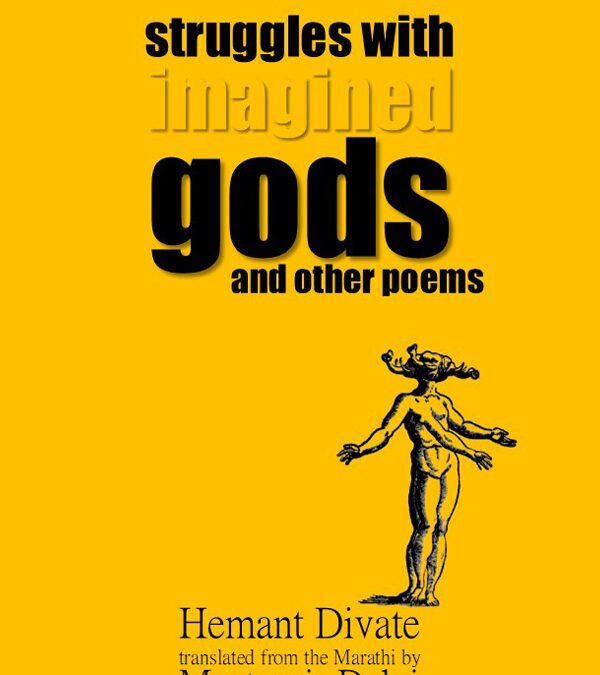
Significantly, Struggles with Imagined Gods stands testimony to what good translation can do to animate poetry. Far too often, the most linguistically capable prose translator turns embarrassingly clunky when it comes to verse. The translator’s understanding of poetic form is as vital as competence in the target language – a fact, sadly, often overlooked. Thankfully, in Mustansir Dalvi’s capable hands, Divate’s poems turn into a series of tonally distinct explosions on the tongue, in which it is possible to discern the astringent from the toxic, the salty from the acidic.
Arundhathi Subramaniam
The Book Review India
In Struggles, the poet’s imagined god “searches for humanity/ in this vast dung-heap of rags.” Lost faith, lost childhood, lost language, mourned, but never surrendered to saccharine nostalgia. Read this book and be disturbed. You may dislike the full-frontal assault in its pages, but you cannot fail to be affected by the “jingle of life/ that slowly scrapes across the surface of dreams. It is in Mustansir Dalvi’s translation that the charge of the original Marathi crackles into an electricity that powers the lines in English. There is great confidence here, the confidence of a poet with access to multiple spoken fluencies, solidly grounded in the language that he writes in. This book reaffirms my belief that poets make the best translators of poetry, and it is a delight to see that both Divate and Dalvi get equal weightage on the cover, rightly (and all-too rarely) claiming co-authorship of the text.
Sampurna Chattarji
Woodsmoke
Divate has an appetite for the contemporary, devouring both its poisons and its nourishments with gargantuan ease. A rich feast, but not for weak stomachs.
Adil Jussawalla
Like the surrealists he admires, Hemant Divate favours the trick mirror and the unsettling image. His work reminds us that modernism came to Marathi literature before it came to Indian writing in English.
Jeet Thayil
Hemant Divate existentialist ‘struggles with imagined gods’ depicts today’s Indian consumerist society as a meaningless / absurd world, filled with disoriented individuals. With colourful contrasts and his ironic,hallucinated and hectic writing-style, he swamps the reader, forcing self examination. For this Marathi Sisyphus, poems are lower case; flattened like society is flattened before the illness of religions. Nostalgia is a refuge, but not a cure. Struggles with imagined gods is another of Divate’s necessary contributions to contemporary Indian poetry.
This is a breath-taking experiment involving three poets, four languages, a pandemic and a million miles of migration. You will not find a bleeding heart here nor any cheap sentiment. Here is a watchful eye and a savage tongue. Here is a calligrapher’s pen and a bow to Ezra Pound. Mustansir Dalvi’s poetry has always meant something more to me than the best words in the best order. Here he shows us the order of things in a disordered world and we are humbled by this act of bravery and of empathy.
Jerry Pinto
Poet and Translator ,Author of Asylum and I want a poem and other poems
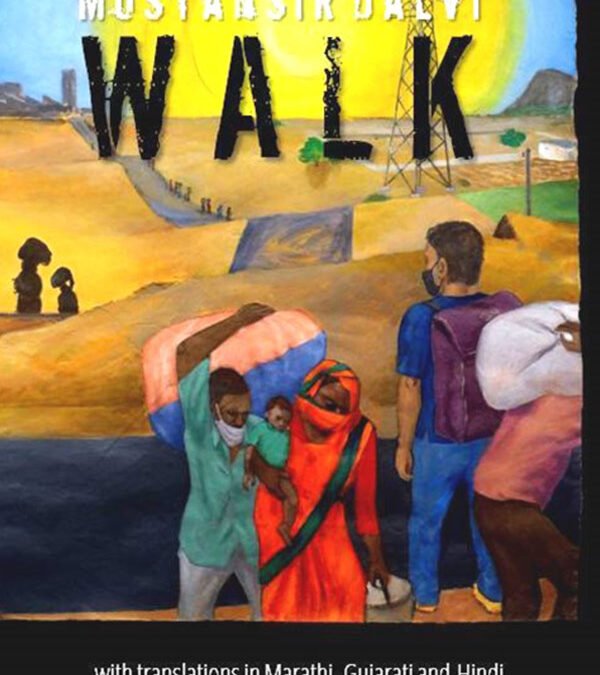
First published as an e-chapbook by Yavanika Press in that dreadful plague year, 2020, Mustansir Dalvi’s brilliant and memorable WALK is an act of homage to the suffering of those millions of Indians, already living precariously between village and metropolis, who were turned into migrants in their own land – forced to walk thousands of miles home, on what was effectively a death march, by a callous State and a society that improvises rather than systematising effective forms of compassion. WALK now returns, under the Poetrywala imprint, as a surging polyphony. Dalvi is joined in this splendid quadriga of a book by Hemant Divate and Udayan Thakker, who have translated these poems into Marathi and Gujarati respectively; the author has rendered himself into a vibrant Hindi. This relay of versions is completed by Sudhir Patwardhan’s painterly testimony to the anguish of the Covid refugees caught up in a humanitarian catastrophe. A poet and translator, Dalvi infuses his writing with multilingual resonance and quicksilver diversity, shuttling among idioms and registers, in-group argot and makeshift patois. As befits the gravity and universal urgency of its subject, this book will reach readers in four languages simultaneously, saying to them, to us: Never forget!
Ranjit Hoskote
Poet and Translator,Author of Jonahwhale and Hunchprose