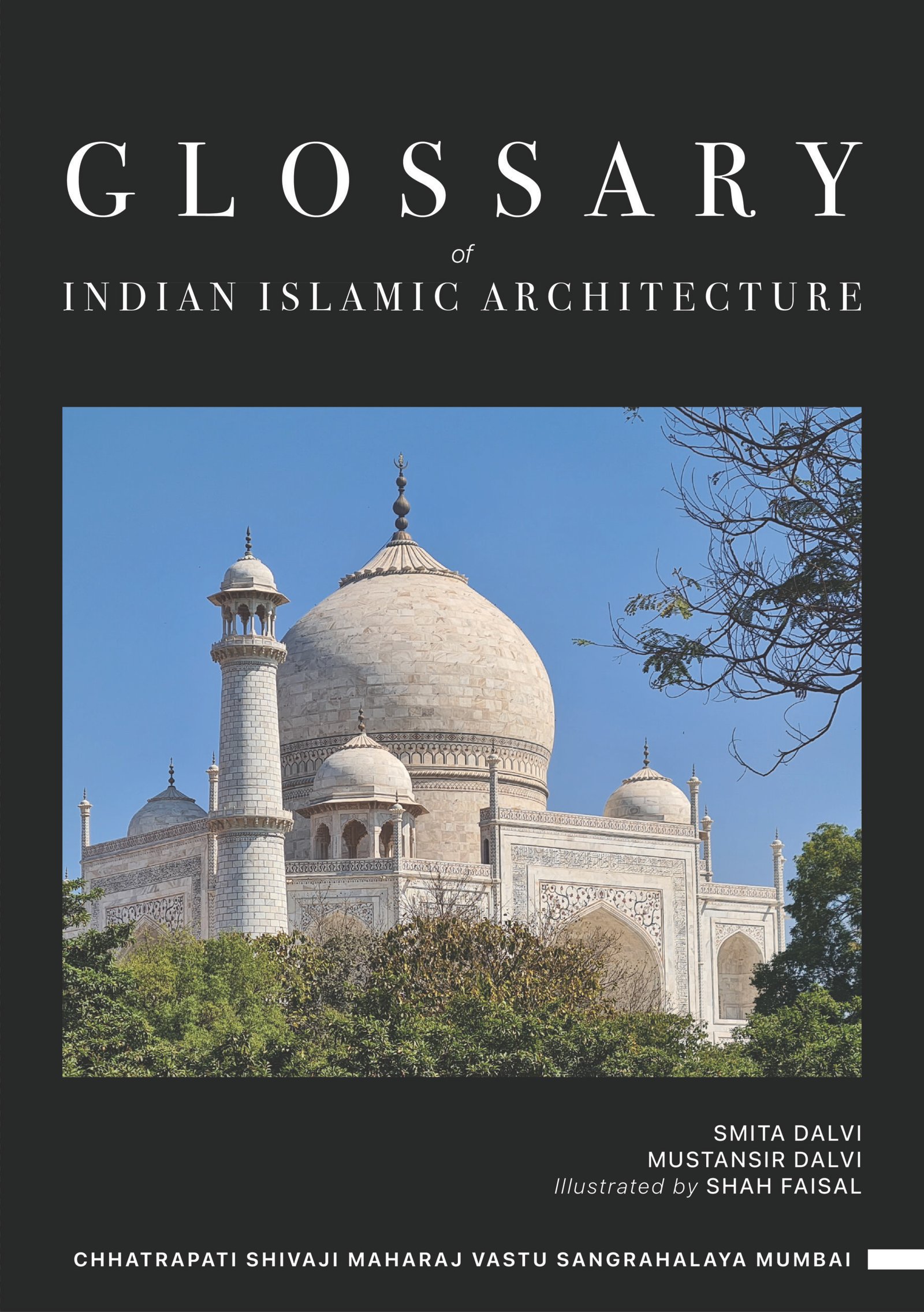
Glossary of Indian Islamic Architecture (Smita Dalvi & Mustansir Dalvi)
Glossary of Indian Islamic Architecture
— Dr. Smita Dalvi and Dr. Mustansir Dalvi
Illustrated by Shah Faisal
Published by
Chhatrapati Shivaji Maharaj Vastu Sangrahalaya (CSMVS), Mumbai
Under the aegis of
CSMVS Digital Library of Mumbai’s Built Heritage Project
Supported by
Bank of America
Glossary of Indian Islamic Architecture unlocks over a millennium of design, from the first mosques of 7th century Kerala to the grand complexes of the late Mughals. Across the subcontinent, these buildings reveal astonishing regional variety yet share an architectural intelligence that is structurally lucid, spatially inventive, and richly ornamented.
This book answers a long-felt need: to truly understand these monuments through a precise naming of parts. Organized into clear, beautifully illustrated chapters on ornament, construction systems, architectural elements, and major building types – mosque, tomb, madrassa, palace, garden, caravanserai, and hammam – it offers lucid definitions, diagrams, and visual guides.
Essential for architects, historians, archaeologists, and every lover of India’s built heritage, this glossary transforms admiration into deep architectural insight.
***********
“Ever stood before the Taj Mahal or Ibrahim Rauza and wondered how to read its forms? The Glossary of Indian Islamic Architecture is your guide.
“Over centuries, a rich, layered language evolved to express ornamentation, craft, technique, and construction across the subcontinent. This glossary goes beyond palaces, mosques, and tombs to include lesser-told structures such as hammams, gardens, and caravanserais, tracing a tradition shaped by cross-cultural encounters, regional adaptations, and the ingenuity of patrons and craftsmen.
“Spanning regions and histories, supported by profusely labelled drawings, photographs and thumbnails, this glossary serves as both guide and lens, helping you see, decode, and appreciate the built heritage of a shared civilization in all its complexity.”
– Rana Safvi, author of Where Stones Speak and The Forgotten Cities of Delhi
More Books
Bombay, Open City
Fantastic Architecture